
by Savannah Bowie | February 12th, 2026
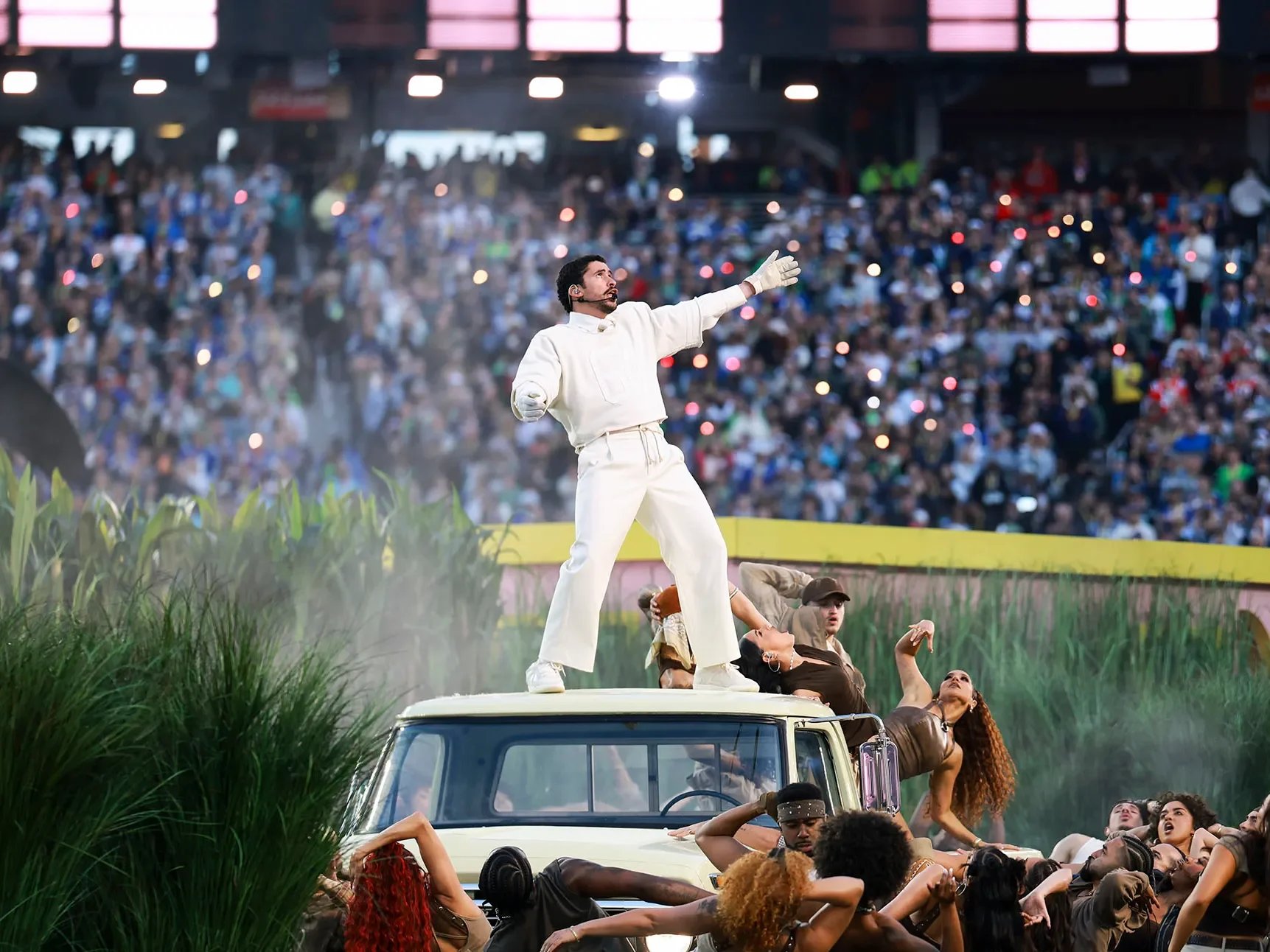
Photograph by Kathryn Riley / Getty
The Super Bowl halftime show is a highly anticipated event every year, sometimes more than the football game itself. It's one of the few stages that reaches millions across borders, languages, and lived experiences at the same time. Bad Bunny understood this, using every last second to tell the truth of Puerto Rico. His performance wasn’t just a collection of his biggest hits or about appealing to a certain audience; it was a cultural statement rooted in the belief that music is a universal language. He delivered the first-ever fully Spanish halftime show in NFL history, proving that even without English translation, music carries emotion and history, connecting people through shared feelings. By centering Latin culture, Bad Bunny invited viewers not to understand every word, but to feel it, to dance, celebrate, and experience a vibrant culture that's often marginalized.
The show sparked debate: some viewers found it “unfamiliar” or “hard to understand,” while others embraced it despite not knowing Spanish. But the performance wasn’t created to explain Latin culture to America; it asserted its place within it. Through songs, symbolism, and collaboration, Bad Bunny proved that music doesn’t divide us by language or nationality, but unites us through shared humanity. Bad Bunny’s halftime show was carefully structured to tell a story. Culture, joy, empowerment, identity, community, love, resistance, and visibility were conveyed from start to finish.
Celebration, Joy, and Empowerment
The show opened with Tití Me Preguntó, a carefree, energizing hit that immediately gets everyone dancing. Following that, Yo Perro Sola, a feminist reggaetón anthem, brought autonomy and independence to the forefront, challenging gender norms and advocating for women’s empowerment.
Next came Safaera, a high-energy tribute to old-school reggaetón. By reclaiming the genre’s history on stage, Bad Bunny turned reggaetón into a cultural archive, showing that Latin music is deep and unapologetic. The song Party celebrated collective joy and liberation. During these songs, celebrity guests including Cardi B, Jessica Alba, Karol G, Young Miko, and Pedro Pascal joined him, amplifying the visibility of Latin identity on a global platform.
Identity, Home, and Community
The performance then moved into Voy a Llevarte Pa’ PR, transforming the stadium into what felt like a giant block party before Bad Bunny crashed a family's Super Bowl gathering. The transition into EoO, briefly blending with Daddy Yankee’s Gasolina, reinforced the universality of Latin music, its rhythms recognized by many, instantly hyping up the crowd.
Right before MONACO, which spotlighted an all-female mariachi group, Bad Bunny paused to speak (in Spanish):
“My name is Benito Antonio Martínez Ocasio, and if I’m here today at Super Bowl 60, it’s because I never, ever stopped believing in myself. You should also believe in yourself. You’re worth more than you think. Trust me.”
By using his given name instead of his stage persona, he reclaimed his identity, reinforcing the idea that success doesn’t require erasing where you come from. In that moment, Benito wasn’t just celebrating himself, but encouraging belief in anyone watching, especially those who rarely see their identities represented.
Love, Diaspora, and Cultural Fusion
The show embraced connection through collaboration with a salsa-inspired remix of Die With a Smile, by Lady Gaga. The performance embodied cultural fusion – American pop adapting Latin rhythms without dilution. Gaga’s appearance may have sparked confusion, but it symbolized mutual admiration and artistic respect.
BAILE INoLVIDABLE transformed the stage into a real wedding ceremony. What was once meant to be the couple's first dance song became a moment that elevated love and family in Latinx communities. NUEVAYoL honored Puerto Rican culture in New York City, featuring Toñita, owner of the Caribbean Social Club, demonstrating how music connects across borders and generations.
Resistance, Visibility, and History
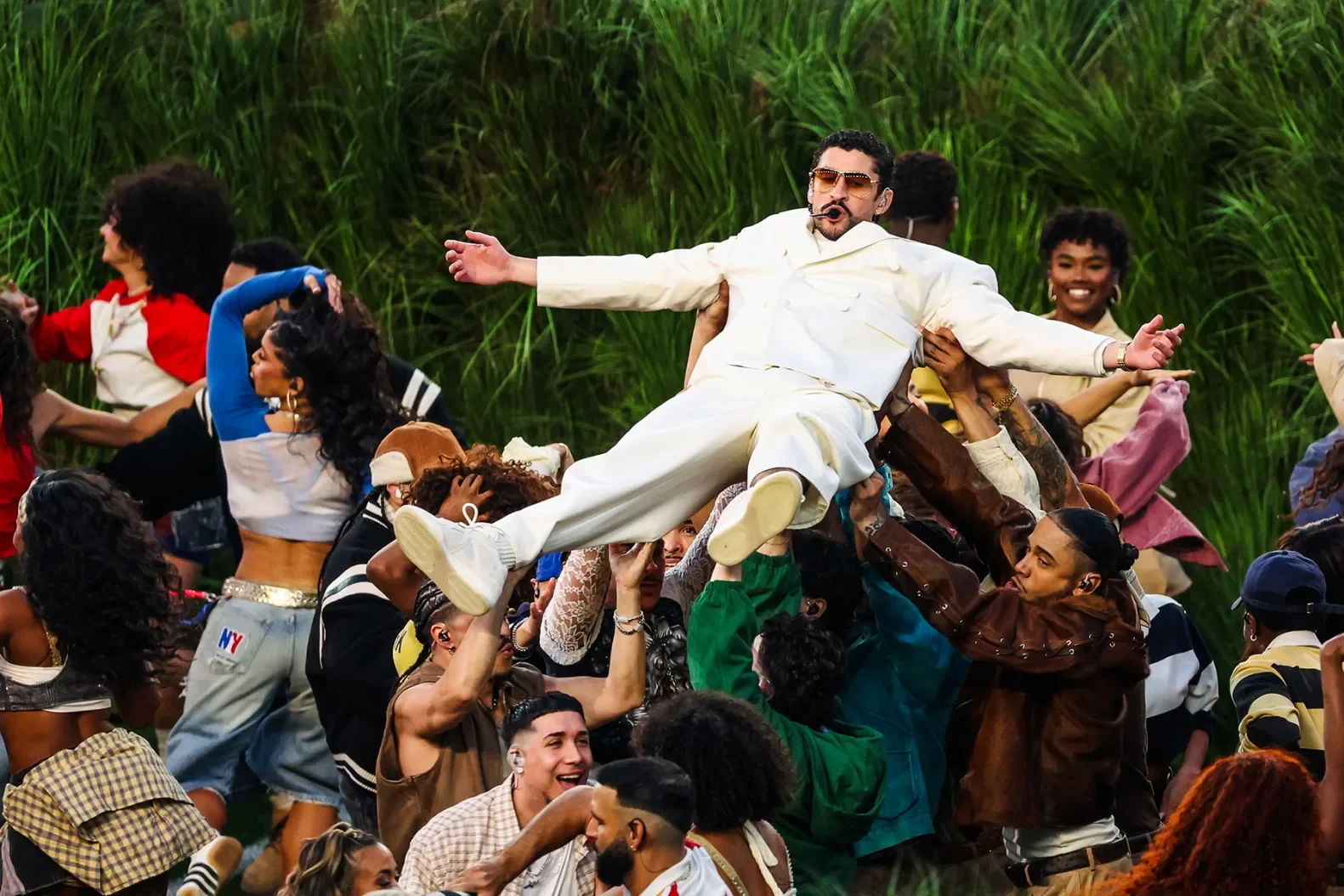
KINDELL BUCHANAN/PA IMAGES/GETTY IMAGES
The tone shifted with Lo Que Le Pasó a Hawaii, performed by Ricky Martin, highlighting cultural erasure and drawing parallels between Puerto Rico's history and the colonization of Hawaii. During El Apagón, Benito held the original light-blue Puerto Rican flag – often a symbol of independence – before climbing an electrical pole. Translating to “The Power Outage,” the song protested gentrification, power failures, and colonial neglect. The stage became a platform for visibility and defiance.
CAFé CON RON revived celebratory energy as flags from every country in North, Central, and South America colored the field. Benito said, “God bless America,” before naming the nations that make up the Americas, reframing what that phrase truly encompasses. Finally, DeBÍ TiRAR MáS FOToS closed the show with reflection and nostalgia. Holding a football that read “Together we are America,” he reminded viewers that America is not a country – it’s a continent shaped by many cultures.
It’s also important to recognize the connection with Kendrick Lamar‘s halftime show last year. Kendrick centered African-American culture and history in the United States; Bad Bunny did the same for Latin communities. Together, these back-to-back performances delivered a powerful message: Black and Latinx communities are not peripheral to American history – they are foundational. Both artists used music to confront social injustices, affirm identity, and demand visibility.
This wasn’t simply entertainment. It was Latin American culture displayed unapologetically to the entire country and the world. Through rhythm, language, symbolism, and collaboration, Bad Bunny proved that music transcends cultures, language, and borders. No matter your background, music creates a shared emotional space where people can connect and belong.
Art is inherently political and always has been – not to divide, but to unite. In a time when division often dominates headlines, Bad Bunny trusted music to do what it’s always done best: bring people together. The message was very clear. The only thing more powerful than hate is love.